

 home
home
PUBLICATION
A Mind Without Pictures
The Architecture of the Vanished Image
What happens when design cannot rely on the mind’s eye.
Look around you for five seconds, then close your eyes. What do you still see?
Most people still see the room in their mind, the color of the walls, the shape of the table, and the light at the window. But somewhere around one to four in a hundred people see nothing. They cannot form a mental image, they cannot visualize.
We design as if every viewer takes home a mental image, counting on a striking image, exhibition or interface to be stored in our mind and can be replayed later.
Research on mental imagery shows that seeing something, understanding what it means, and being able to picture it in your head are separate mental processes. By focusing almost entirely on the moment of first glance, design culture has been optimizing for immediate attention while giving little thought to what happens after people look away.
It’s called Aphantasia: some people can’t form mental images at will, or only very faintly. Perception and recognition work normally, and so does factual memory. People with Aphantasia know a room when they’re back in it and know their friends’ faces, they just can’t visualize those images with closed eyes. In a 2020 survey by Alexei Dawes and colleagues they reported spatial abilities, including spatial memory and navigation, on par with everyone else.
The Room Study
Wilma Bainbridge and her colleagues tested this in 2021 with 61 people with Aphantasia and 52 without. Everyone drew three rooms, once looking at a photo, once from memory. Looking at the photo both groups drew equally well. From memory the aphantasic group drew fewer objects with less color, and some just wrote “window” inside the outline of a window. But the objects they did draw were in the right places, as accurate as the others. And they made fewer mistakes. None of them drew an object that hadn’t been in the rooms.
The other group’s mistakes are the interesting part. People with normal imagery made about 14 mistakes on average, and kept adding things that were never there, like a piano in a living room that had none. Bainbridge suggests they may have filled the gaps with other living rooms they remembered. If that’s right, the vivid picture made the memory richer and at the same time less true to what was there.
Remembering Yesterday and Imagining Tomorrow
In a 2022 study, Alexei Dawes and his team asked participants with Aphantasia to describe personal memories from their past and imagine possible events in their future. In both cases, their descriptions contained fewer sensory details, especially visual details, than those of typical visualizers. Yet their ability to reason, solve problems, and plan steps remained intact.
You do not need an internal movie projector to think ahead, understand a system, or make a decision. Visual simulation is only one way the mind handles time. When we realize that an audience may not hold an experience as a vivid inner film, the role of design changes. The environment itself has to carry more of the structure.
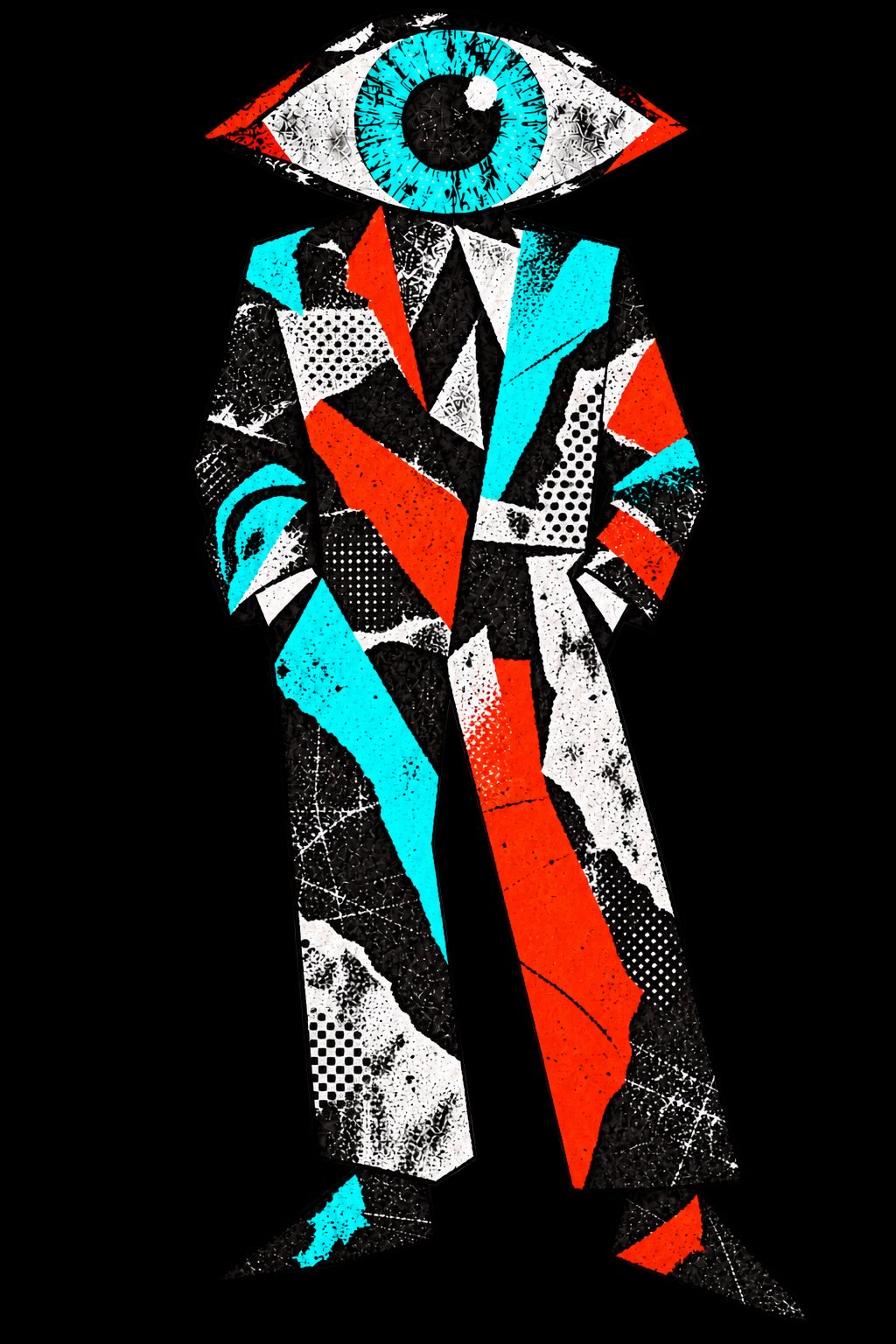
The Multisensory Equation: Alignment versus Tension
Faced with the limits of internal visual imagery, some propose a quick remedy: add more sensory channels. If people cannot picture a visual layout, surround them with soundscapes, haptic textures, and scent.
Yet cognitive research urges caution against treating multisensory layering as an automatic substitute. Aphantasia is heterogeneous: while some people experience an absence strictly in visual imagery, others report reduced imagery across auditory or tactile modalities as well. Simply stacking sensory inputs does not guarantee clearer memory; without structural coherence, it easily turns into cognitive noise.
Congruence and Dissonance
The relationship between sensory streams matters immensely. Studies on learning show that when sound and image are congruent, they help people process information faster. When cues conflict without purpose, they can create confusion and rejection.
That does not mean design must always be smooth and frictionless. In art, film, and experimental media, creators often use deliberate contrast, a sound that clashes with an image, or a visual paradox that surprises the viewer. That kind of tension works when it is used with intent: it interrupts passive intake and invites the audience to stop, think, and interpret. But whether you are designing for clear utility or for artistic tension, sensory cues need purpose, not volume.
Designing for Retrieval
If we stop assuming that viewers take home an exact visual replica of our work, how does design thinking change?
What if we shift our focus from designing solely for display to designing for retrieval? Building experiences that help diverse minds understand, remember, and use information after the initial encounter is over, without needing a picture in their head.
We can also rethink how we evaluate creative work. Most design is judged right at the start: Does it look compelling? Does it stand out on screen or in a room?
We should start to ask what happens later. Can someone explain the structure of the work after stepping away? Can they find what they need without having to mentally picture the whole layout?
The Choreography of Perception
Orchestrate image, sound, scent, material and language on purpose through sensory hierarchy, roles, narrative and timing. Use dissonance on purpose and cut noise. The aim is that people can find their way back to an experience in more than one way and still recognize and remember it as theirs.
©2026 Carolin Vedder
Selected Reading
Bainbridge, W. A., Pounder, Z., Eardley, A. F., & Baker, C. I. (2021). Quantifying aphantasia through drawing: Those without visual imagery show deficits in object but not spatial memory. Cortex, 135, 159–172. https://doi.org/10.1016/j.cortex.2020.11.014
Dawes, A. J., Keogh, R., Andrillon, T., & Pearson, J. (2020). A cognitive profile of multi-sensory imagery, memory and dreaming in aphantasia. Scientific Reports, 10, 10022. https://doi.org/10.1038/s41598-020-65705-7
Dawes, A. J., Keogh, R., Robuck, S., & Pearson, J. (2022). Memories with a blind mind: Remembering the past and imagining the future with aphantasia. Cognition, 227, 105192. https://doi.org/10.1016/j.cognition.2022.105192
Kim, R. S., Seitz, A. R., & Shams, L. (2008). Benefits of stimulus congruency for multisensory facilitation of visual learning. PLoS ONE, 3(1), e1532. https://doi.org/10.1371/journal.pone.0001532
Li, J., & Deng, S. W. (2023). Facilitation and interference effects of the multisensory context on learning: A systematic review and meta-analysis. Psychological Research, 87, 1334–1352. https://doi.org/10.1007/s00426-022-01743-z
Wright, D. J., et al. (2024). An international estimate of the prevalence of differing visual imagery abilities. Frontiers in Psychology. https://doi.org/10.3389/fpsyg.2024.1454107
contact
For commissions, talks, and collaborations.